The Burning Oud Abaya
The Abaya is a black, flowing cloak traditionally worn by women in the Gulf and other regions. Typically made from polyester or crepe silk, its black dye was historically derived from petroleum. The Thobe, a garment worn by men, is a white, floor-length robe with a collar and cuffs.
The abaya and thobe are iconic cultural garments that remain underrepresented in wider discussions of identity. Their association with personal sacredness often creates a resistance to engage with them beyond fashion. The Burning Oud Abaya retains the core form of these garments while opening them to both personal and collective lived experience.
Oud, formed within Aquilaria trees as a response to wounding, carries a tension between fragility and value. This act of scarring becomes a point of reflection — where material transformation mirrors human experience. Traditionally burned in moments of reverence and ritual, oud here becomes something else: a vessel for mourning, for what is lost, and for what remains unspoken.
The work originates from a vivid dream of an abaya covered in oud wood chips and consumed by fire. This image connects to a long-buried memory of a woman whose life ended in fire, shaped by silence and societal pressure. The burning oud becomes a point of connection between human grief and the wounded tree.
Across the series, the abayas become monumental garments navigating states of destruction, loss, resistance, renewal, and transformation.
Life Stages
The abaya moves across sites and conditions, shifting in state and meaning.
Plain Abaya — Film (Birth)
Doha — First Appearance
London — Circulation
Qatar Island — Pre-Exhibition State
ASBAR — Spatial Activation
Qatar — Care / End of Life / Healing
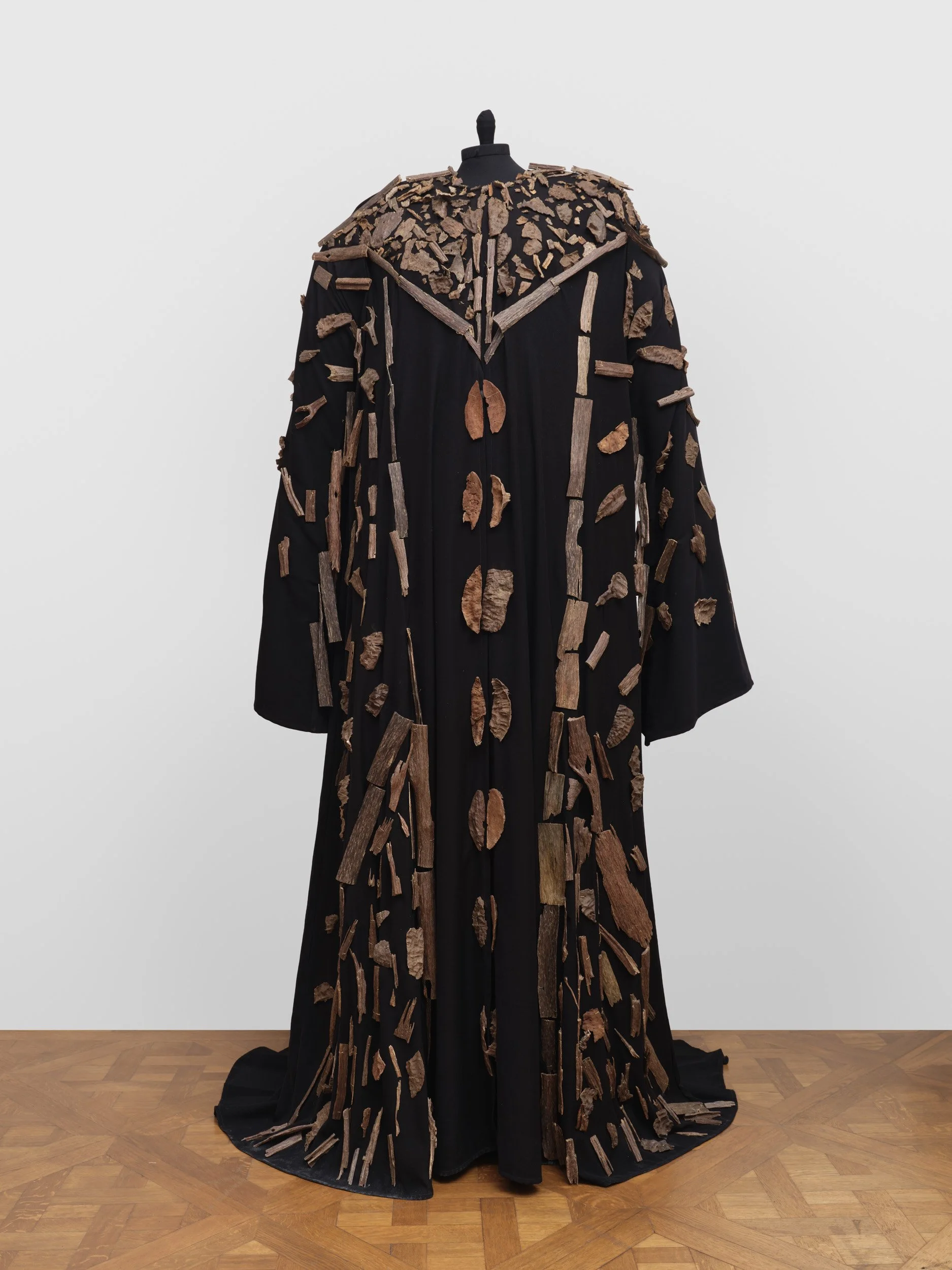
The Oud Abaya, 2024
Oud on fabric

IV Drip Guerrilla Installation in Al Khor - Qatar, The Oud Abaya, 2025
Oud, recycled water bottles and IV tubing on fabric
Map of Orientation
A flat-lay abaya, opened and unstiched in London, revealing its internal structure and material composition.
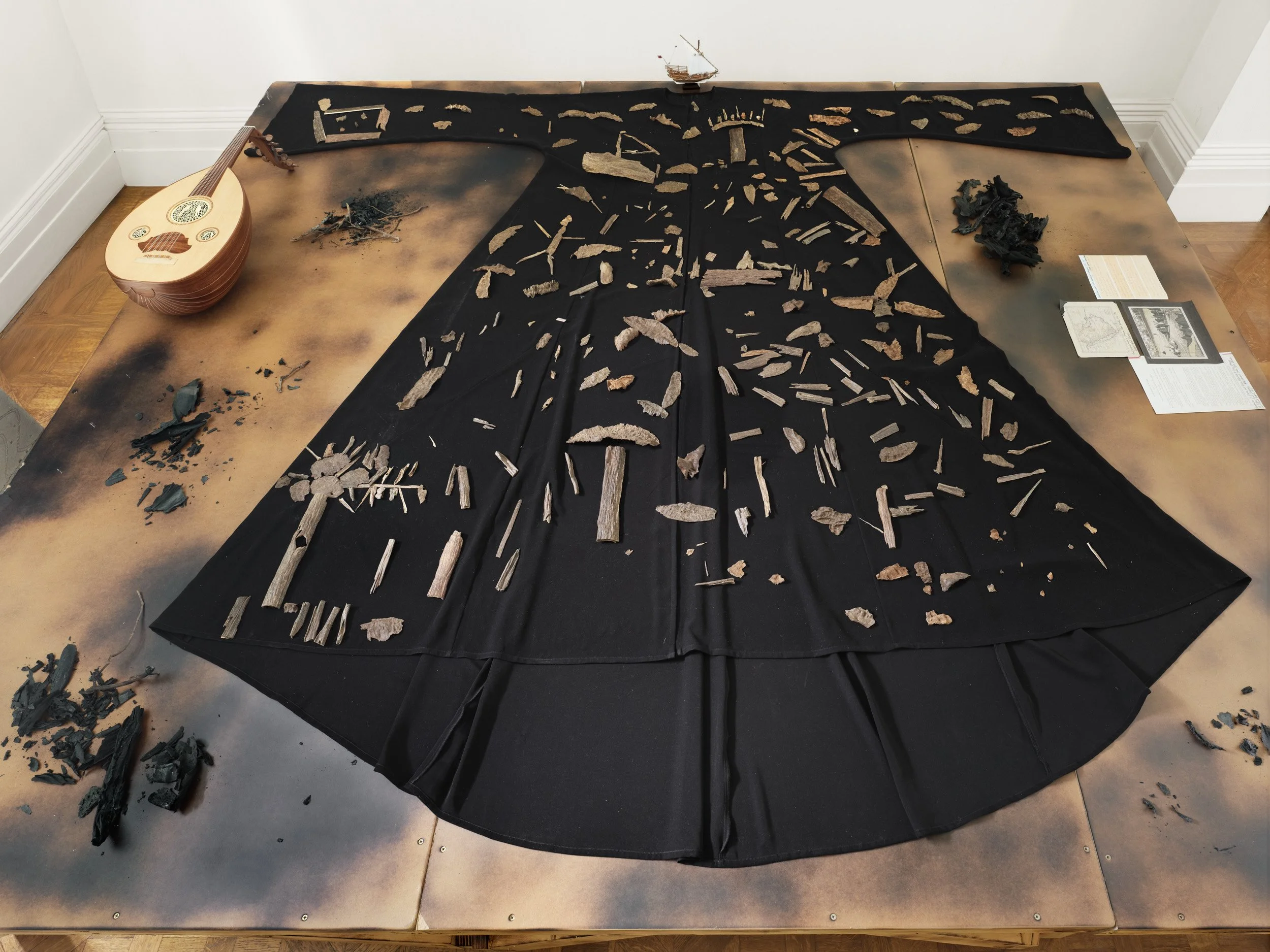
Map of Orientation, 2024
Oud on polyester, crepe, silk
320 x 280 cm