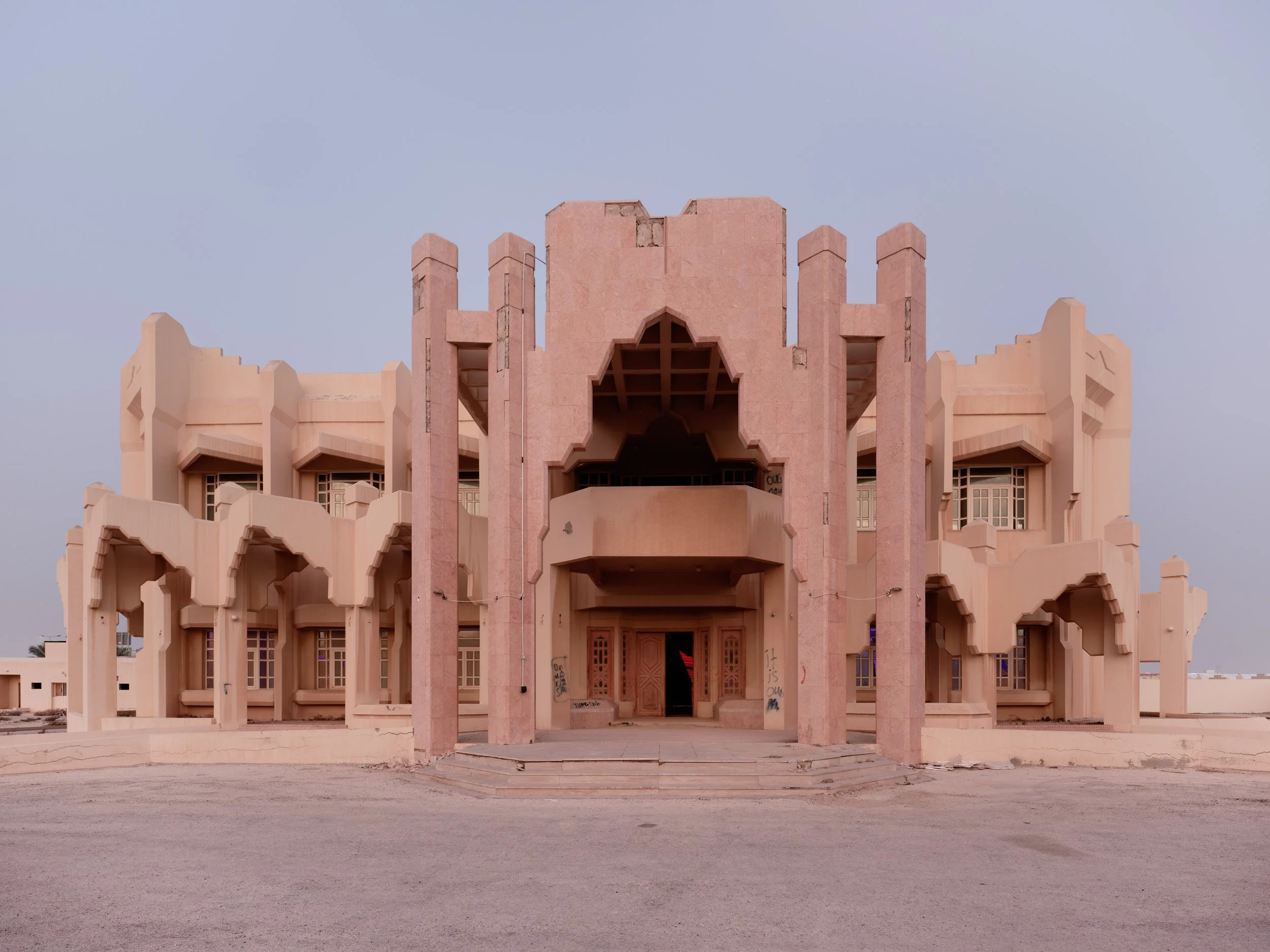
ASBAR / أصبر, Qatar
4–8 February 2026
Asbar is an independently conceived and privately funded exhibition by Reem, curated and installed by the artist within an unfinished Neo-Islamic domestic villa in Al Wakrah, Qatar.
Constructed between the late 1980s and early 1990s, the house is an early domestic example of Neo-Islamic revival architecture in Qatar. Its fortress-like symmetry, applied arches, sand tone rendered concrete, and deep shadow articulation reflect a postmodern Gulf villa language associated with permanence and status.
The structure was built with the intention of being inhabited. It never was.
Left incomplete and unoccupied, the house stands built but not lived in, monumental and hollow, paused mid intention.
Though structurally intact and materially robust, the land now carries commercial liability and remains at risk of demolition. The building is physically permanent yet temporally uncertain.
During its vacancy, the structure became the subject of local speculation and online ghost narratives. Reputation replaced lived reality.
Asbar engages this condition directly.
Rather than amplifying these projections or reducing the site into spectacle, the exhibition returns to the house as a material and spatial condition, refusing its reduction into image or myth.
The project treats architectural suspension as a form of psychological architecture, addressing interrupted belonging and the circulation of projection onto buildings and onto women who exist outside normative containment.
Privately funded by women and developed outside institutional frameworks, Asbar operates as an independent, artist led exhibition. Within the Qatari context, autonomous site specific practice of this scale remains uncommon.
The exhibition opened through a series of invited viewings across its five day activation.
Press mention:
View ASBAR
The Oud Abaya Solo, London
16–18 May 2025, Kensington
The Burning Oud Abaya came together as a complete body of work in Reem’s first solo exhibition in London.
The three-day exhibition included monumental abayas, photography, and film installations that explored women’s experiences of exploitation, silence, and survival.
Audiences engaged with anonymous reflection prompts first introduced in Qatar, now brought into the UK context.
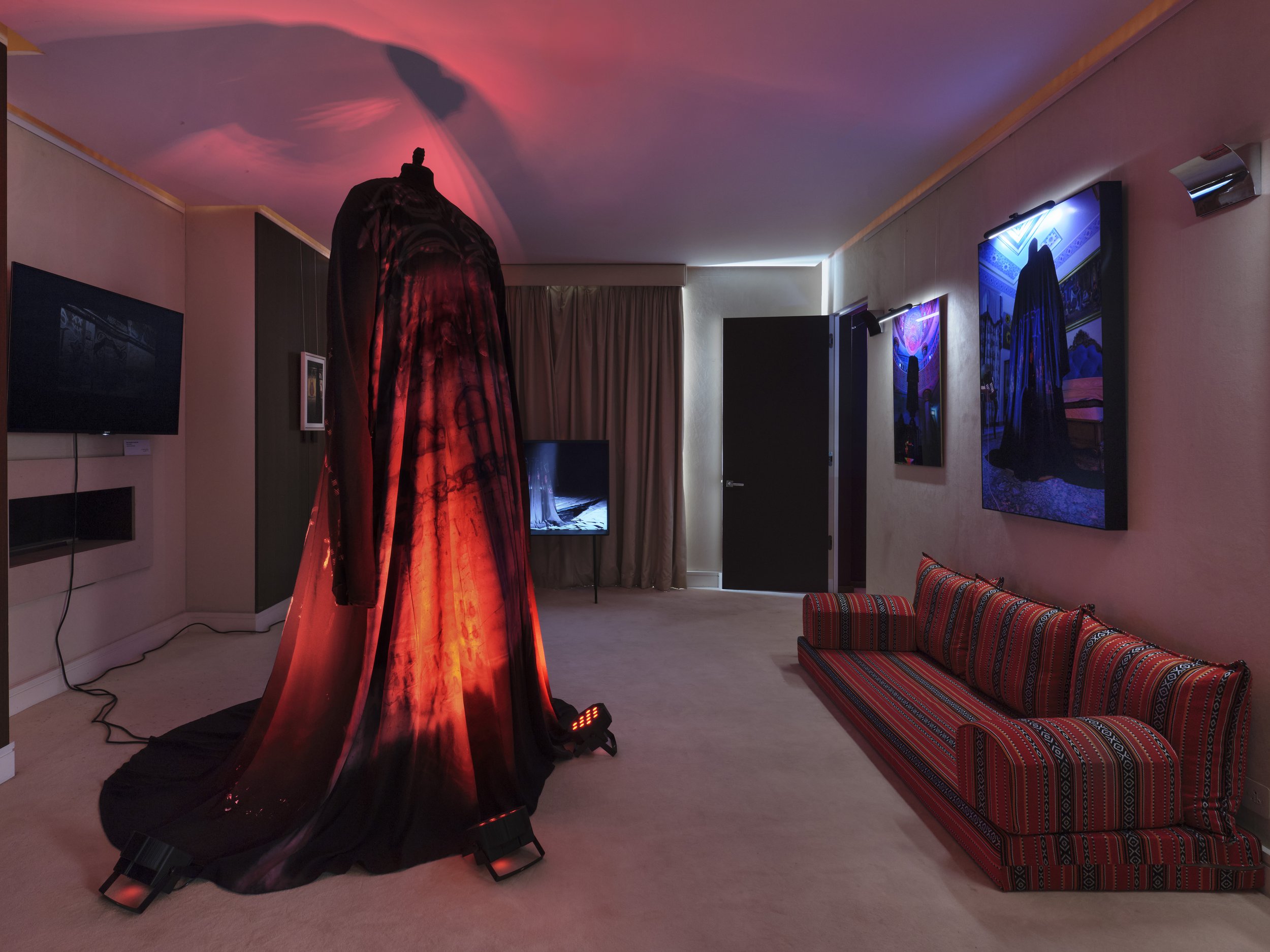


© Eva Herzog
©Lee Pretious Studio
Trafficked: Graffiti, London
18 January 2025
Graffiti artist Areas Abramavicius created this work in response to a single line:
An Arab woman trafficked into the Western world, this is her garment.
The piece channels Dana’s story not as illustration, but as rupture.
Her movement from a tribal landscape into the pace of London is not transition, but disappearance.
The abaya, a marker of identity, is displaced into the underground — a space of anonymity, crime, and erasure.
Dana did not fall from poverty into crime.
She moved from wealth into invisibility.
This work does not document her.
It holds the moment before her return.
“ترافِكت” هي سلسلة جريئة، وبدون تجميل، تحكي قصة دانا، امرأة من الخليج تم الاتجار فيها إلى المملكة المتحدة. هالفصل مجرد جزء من قصتها: القرافيتي.
إحنا تعودنا نصدق إن الاتجار بالبشر يصير بس للناس اللي يعانون من فقر مادي. قصة دانا تكسّر هالوهم. رحلتها تكشف بُعد أعمق، ونادرًا ما يُتكلم عنه، من أبعاد الاتجار مبني على العزلة العاطفية، القمع الثقافي، واستغلال الامتيازات.
بالتعاون مع فنان القرافيتي أرياس أبرامافيشوس، واللي ما انعطى غير سطر واحد كموجّه: هالعمل ينقل إحساس دانا. يتخيل الصدمة النفسية والثقافية من الانتقال من سكون مجتمع قبلي، وسعة الصحراء، ومدينة صغيرة قاعدة تنمو، إلى سرعة لا ترحم في مدينة عملاقة مثل لندن.
دانا ما بس عبرت حدود. دانا اختفت.
هالفصل من القرافيتي يصير توثيق بصري لاختفائها، قبل حريتها. يحط العباية، رمز قوي لهويتها، في زوايا لندن التحتية — مكان ما أحد يتوقع يشوف فيه امرأة خليجية، فضلاً عن تواجدها في عالم الجريمة والاستغلال.
سقوط دانا ما كان من فقر إلى جريمة كان من غنى إلى اختفاء. قصتها تعيش في تقاطع عنيف بين الثقافة، والجندر، والطبقة، والصمت.
الموضوع مو عن الجريمة بس. هو عن المقاومة من خلال الفن. لما نحكي قصة دانا عبر القرافيتي، إحنا ما نسلّط الضوء على بشاعة الاتجار بس، إحنا نكرّم جمال القرافيتي كلغة للّي ما لهم صوت. هو شكل من أشكال التعبير اللي دايمًا انتمى للممحوين، للمنفيين، وللي ما أحد سمعهم.
التعاون كان عاطفي بشكل عميق. الاحترام اللي انعرض للعباية والعناية في نقل قصة دانا كانت لحظة شرف، ولحظة استرجاع. هالعمل ما بس يتكلم عن دانا. هو يذكرها.


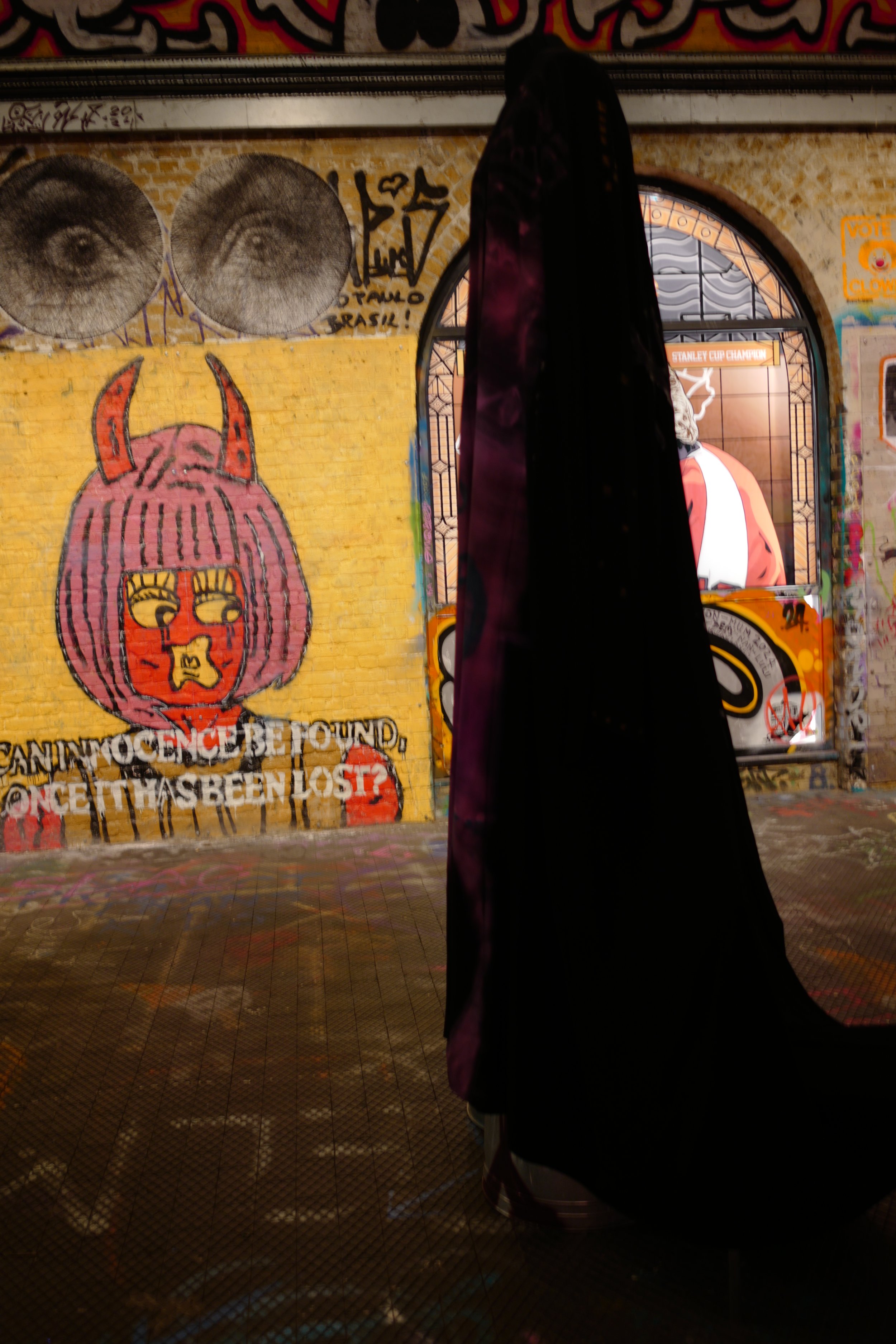
Oud Abaya, Public Installation
11 February 2025, Doha

The Oud Abaya was presented publicly at 5/6 Park on Qatar’s National Sports Day.
Positioned within a wider landscape of public art, the work invited reflection through a series of anonymous prompts:
What are the untold stories of women around you?
What grief are you carrying?
How can grief be used positively in life?
Press MentionsAl Arab (Newspaper & Digital) Al Sharq (Newspaper & Digital)